Introducing our Birthstone blog
It’s the start of a new year, and we thought it would be a good idea to take you through each month’s birthstone- a sort of baroque almanac if you will. Over the next year we’ll be dedicating one blog post a month to its correlating birthstone. Talking about the stones history, properties, and hopefully giving you some jewellery inspiration featuring the stone. This is great if you’re considering birthday presents, looking for jewellery to commemorate a specific time of the year, or just want to brush up on some fun gemstone knowledge.
Why do we have birthstones?
The wearing of stones representing your birth month is an international trend rooted in centuries-long tradition. It existed in various cultures throughout the world, but became standardised in the 20th century by the National Association of Jewellers, and birthstone jewellery became more widely popular.
What is January’s birthstone?
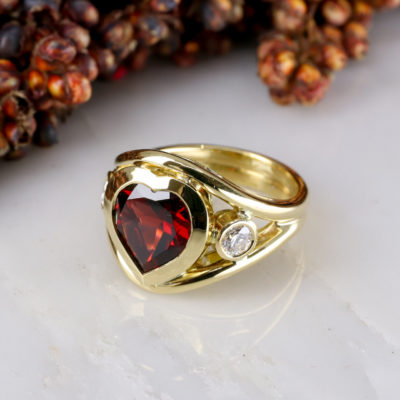
We begin in January- a time of year that, for many people, represents new beginnings. It’s the coldest month of the year in the northern hemisphere, but the warmest in the southern hemisphere. The birthstone for January is garnet. It is considered a stone of protection and strength as well as love and passion.
The history of garnet
Garnet has a varied history dating back centuries. The ancient Egyptians, who were renowned for their love of gemstones, mined and used garnets extensively. They were popular as an essential part of royal burials, as their intense blood- red colour symbolised life force and vitality.
Garnet stone jewellery also appeared as a status symbol in Ancient Rome, where it was carved and set into signet rings used to stamp wax seals. The word garnet originates from the Latin word ‘granatum’ meaning pomegranate- an apt name as the red resembles the colour of pomegranate seeds!
In the Middle Ages, the stone became more of a symbol of protection and healing. Knights would sometimes have them stitched into clothing when they went on crusades to keep them safe from injury.
Garnets have often been worn by nobility throughout history to distinguish themselves. In christianity, garnet was used by bishops and priests to symbolise Christs blood and sacrifice.
Garnets were sometimes called ‘Carbuncles’. A term was used to refer to any deep red cabochon cut gems. At that time, it was difficult to distinguish between different types of red gemstones (such as ruby or spinel), so they were often considered to be one type of gemstone.
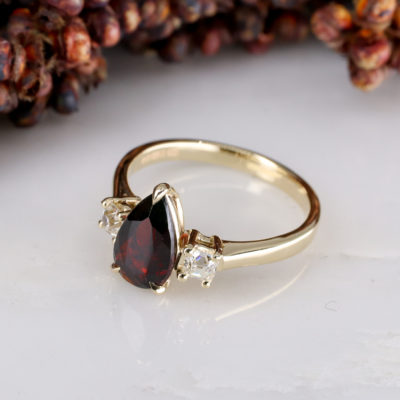
The rainbow of garnet
Generally, garnet is associated with a deep rich red colour- but they can also be found in green, orange pink and purple. We love the beautiful variety of colours available in garnets!
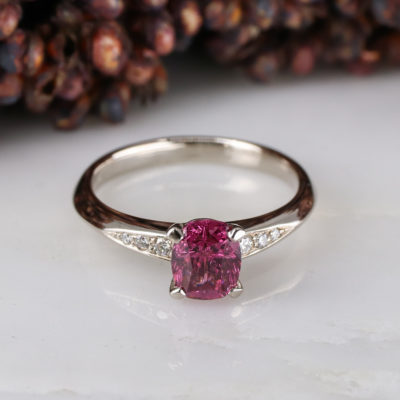
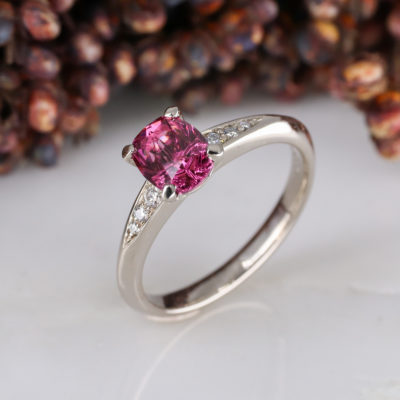
This ring from our ‘coco’ collection features a deep pink rhodolite garnet with small white diamond accents on the shoulders weighing 0.09cts.
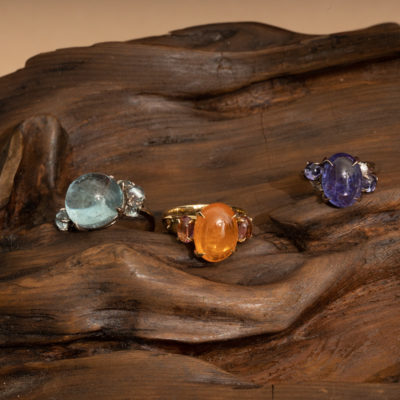
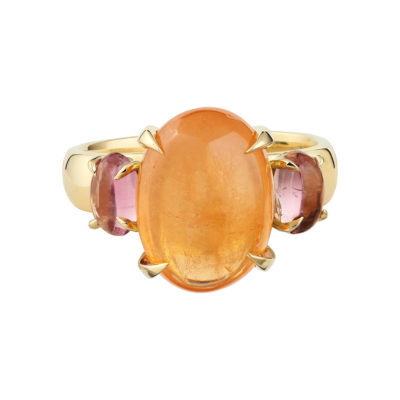
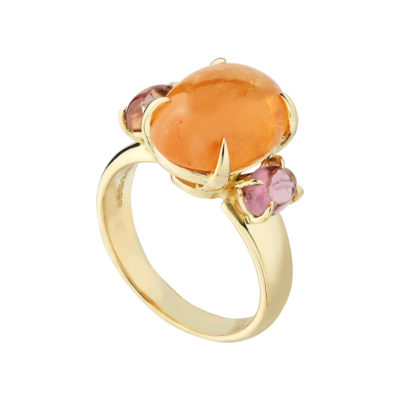
One of the rings from our ‘bubble’ collection features a delicious looking oval 6.50ct Mandarin Garnet.
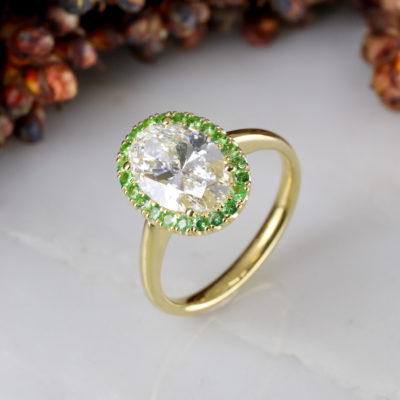
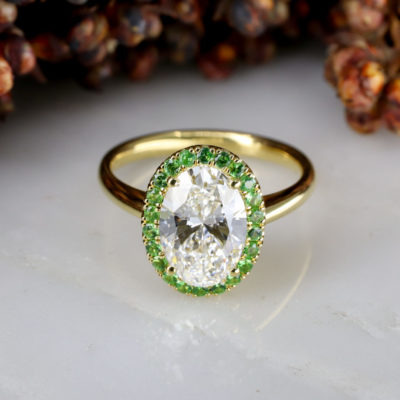
We also used green garnets on this bespoke commission to create a unique dazzling halo around an oval lab grown diamond.
Is garnet safe in jewellery?
Garnet ranges from a 6.5-7.5 on the Mohs scale of hardness, so it’s fairly durable and suitable for most jewellery, but may require some extra care- especially with rings.
Creating garnet jewellery
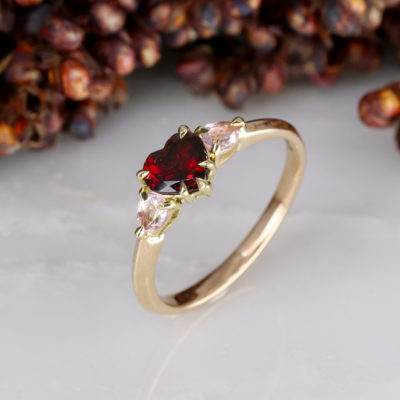
We adore the rich history of garnet and its symbolism as well as how versatile it is. If you love this gemstone as much as we do, and would like to chat about creating a piece of garnet jewellery, get in touch with us. Our team is always happy to help and we’d be excited to hear your ideas!
Love, Team Baroque